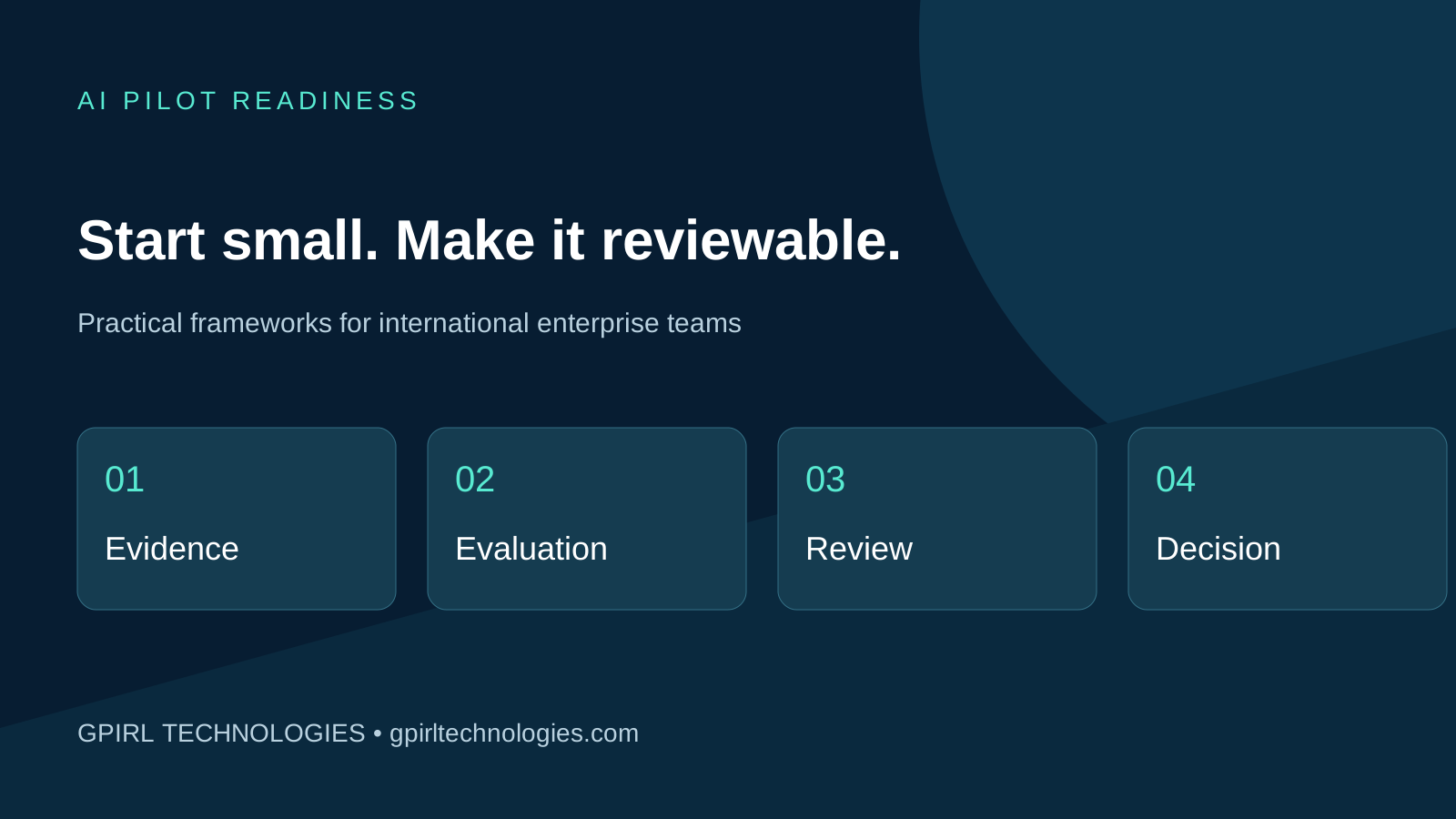
The examples below illustrate workflow design questions. Product scope and integrations are assessed for each use case.
Choose one decision and one accountable owner
An enterprise AI pilot should start with a decision that a real team needs to make. A broad ambition such as automating operations is difficult to evaluate. A narrower question, such as preparing the evidence for a recurring exception review, gives the pilot a usable boundary.
Write a short charter covering the process owner, intended users, required inputs and allowed output. State what the pilot may read, what it may propose and what it may change. A read-only discovery exercise and an authorised production workflow need different operating controls.
Check whether the evidence is usable
List the source systems, document owners and expected update frequency. For each source, identify the information that must remain current and how the pilot will detect a missing or conflicting input. A system should not silently replace missing evidence with a plausible explanation.
International teams should also record the language, local terminology and jurisdiction attached to a document. A policy for an Italian entity is not automatically applicable to a US, Canadian, Indian or Chinese operation. Route country-specific interpretation to the appropriate specialist.
Build an evaluation set before the demonstration
Create synthetic examples covering a normal case, incomplete evidence, contradictory sources and a request outside the agreed scope. Record the expected response before running the system. Sometimes the correct response is to ask a question or stop for review.
Evaluate source traceability, completeness, permission boundaries and the effort required by the next person in the process. Time saved is useful only when the output remains fit for the task. Keep a baseline from the existing workflow so that improvements can be assessed rather than assumed.
Make the review decision operational
Name the reviewer and backup reviewer. Define the evidence they need, the changes they can authorise and the route for unresolved issues. A review screen should distinguish the source facts, the proposed interpretation and the action awaiting approval.
Before expanding scope, review the failed cases and document the changes required. GPIRL Technologies is developing enterprise AI capabilities around knowledge, orchestration and explicit controls. A pilot discussion should assess the fit for a specific workflow; it should not assume that every roadmap capability is already deployed.
Sources and further reading
The workflow examples are practical design proposals by GPIRL Technologies. References do not imply product certification or endorsement.
FROM INSIGHT TO YOUR USE CASE
Explore this with Platform.
Bring a representative workflow, the available evidence and the decisions your team needs to support.