Start with one release decision
A container is physically available in the yard. A truck slot is booked. The documentary release still needs confirmation. In an internal GPIRL Technologies pilot, this is where PortOS AI [S1] starts. The test focuses on one question a planner can act on. Which document revision must be confirmed before the exception can close?
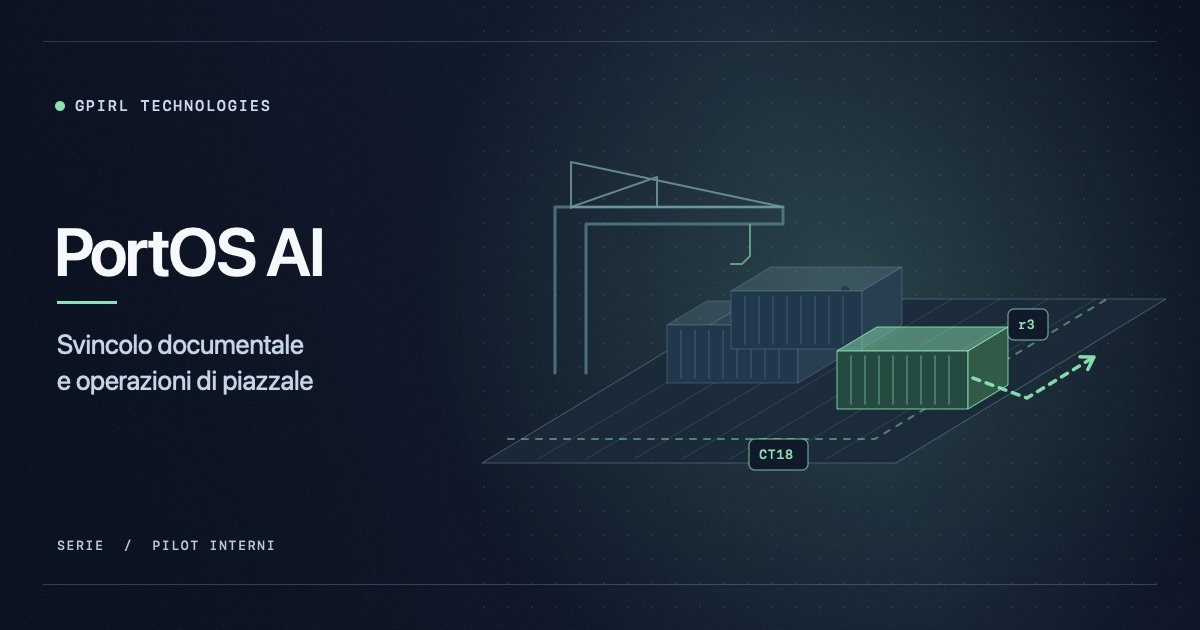
The fictional record CT18 has yard location Y-A18 and a 10:30 truck slot. The document release is still pending at revision 3. Showing each fact together helps the planner see which work can move forward and which decision still depends on the document owner. It also gives the receiving team enough context to understand why the exception remains open.
Confirm the current revision and inspect the handoff
The team opened the pending record and registered the revision 3 confirmation. The exception changed to closed, a confirmation appeared in the history and the transport view showed the update. A separate session still showed its own pending case. Resetting the scenario restored the initial state for another test.
For any similar port operation, capture a stable container identifier, the release reference, the active document revision and the team authorised to confirm it. A useful follow-up test injects an earlier confirmation after a newer document revision is active. The event should remain reviewable and the current release should stay pending. Our companion AirportOS pilot demonstrates a comparable stale-event check in a different workflow [S2].
Bring a real exception to an evaluation
Choose one recurring release exception and map the document system, yard record and transport handoff. Agree which source defines the active revision, who can resolve disagreements and how the update reaches the next team. Measures for a future evaluation could include the time needed to find the current revision and the share of cases that require escalation.
The CT18 scenario ran locally on a MacBook Air M1 with synthetic records. Live source integration and acceptance with the terminal team are open production checks. The case gives those teams a specific workflow to assess in discovery.
Sources and further reading
References do not imply product certification or endorsement.
Have a related operational question? Discuss a document release exception with GPIRL Technologies →