The examples below illustrate workflow design questions. Product scope and integrations are assessed for each use case.
A search result needs context
Finding a relevant-looking document is only the beginning of a knowledge workflow. The user also needs to know who owns it, which entity or market it concerns, when it was reviewed and whether a later version exists. Without that context, an accurate quotation can still support the wrong decision.
For teams working across Italy, North America, China, India and other growth markets, maintain a common register with market-specific entries. The register provides consistent navigation while preserving the differences that matter to the operating team.
Define a minimum source record
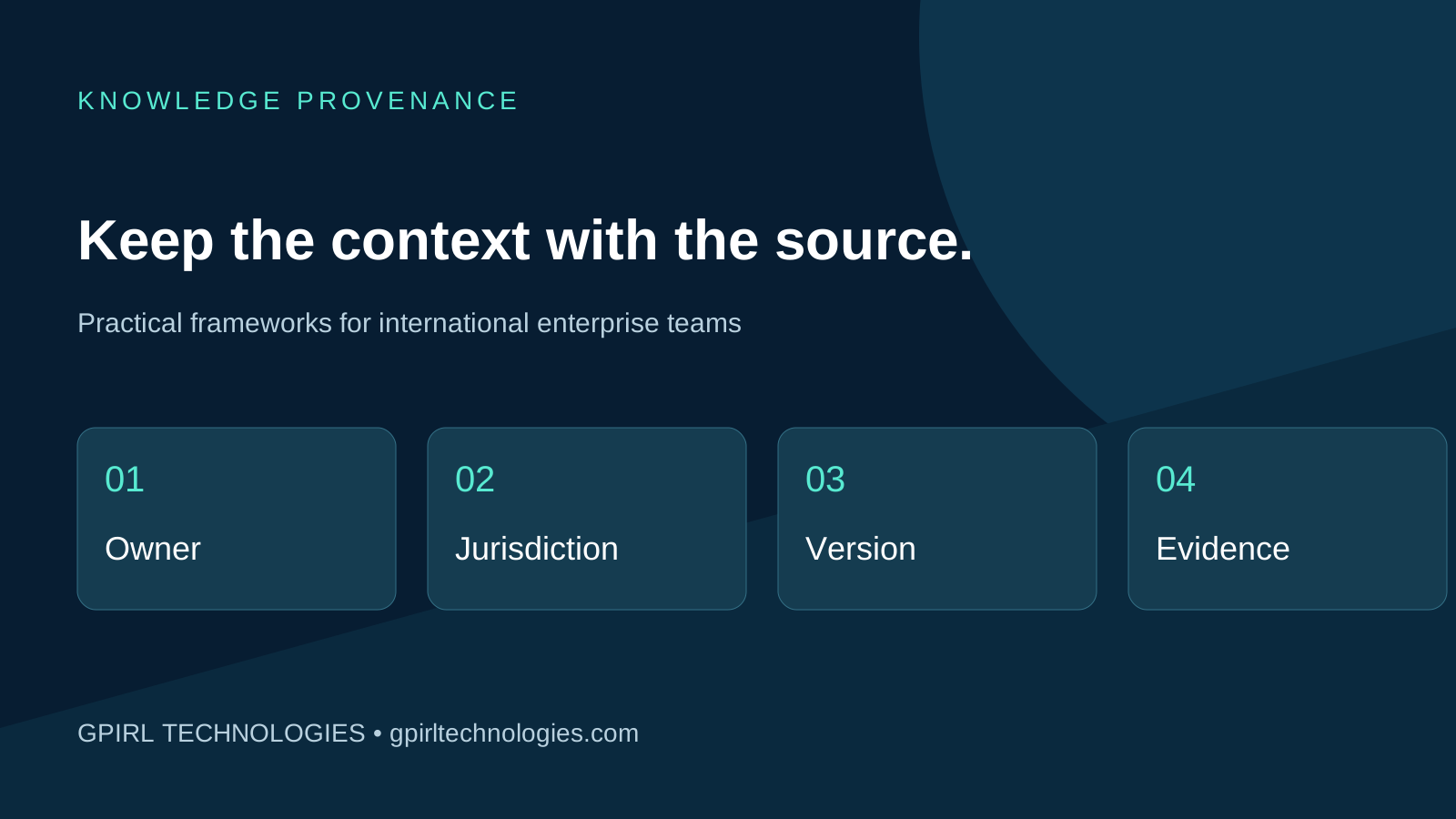
A practical record can contain the document title, stable identifier, owner, jurisdiction, effective date, review date, version and access classification. Add the source link and a short description of the questions the document is intended to answer.
Distinguish publication date from effective date. A document can be newly published while describing a future change, or recently uploaded while containing older guidance. Mark dates as unknown when they cannot be verified; an invented date creates false confidence.
Expose conflicts rather than averaging them away
If two sources disagree, preserve both references and identify the unresolved point. Define who can determine which source governs the case. A summary that blends conflicting positions into a single answer can hide the exact question that needs review.
Use a synthetic test with an outdated policy and a newer correction. Ask whether the system retrieves the correction, shows the relationship and explains what remains uncertain. Repeat the exercise with translated material to check whether qualifications survive the translation.
Give maintenance an owner
Assign review responsibility to a team that understands the content. Record the reason for a change and the workflows affected by it. When a document is withdrawn, identify whether earlier recommendations need to be revisited rather than simply removing the file from search.
GPIRL Technologies approaches enterprise knowledge as part of a governed workflow. A useful discovery discussion starts with one source register and one decision it must support. Product scope, integrations and local interpretation should be assessed explicitly for the use case.
Sources and further reading
The workflow examples are practical design proposals by GPIRL Technologies. References do not imply product certification or endorsement.
FROM INSIGHT TO YOUR USE CASE
Explore this with Platform.
Bring a representative workflow, the available evidence and the decisions your team needs to support.