The connection is only one part of the energy project
A shore-power project has a visible interface: electricity passes between a land installation and a ship. Its planning boundary is wider. A useful assessment has to connect the visiting fleet, the port's energy infrastructure, the organisation responsible for each decision and the information available before a vessel arrives. Treating the connector as the whole project leaves those relationships unspecified. This article examines that planning boundary, rather than prescribing a switching sequence or selecting electrical equipment for an installation.
EMSA's shore-side electricity guidance is addressed to port authorities and administrations. Its stated scope runs from project decisions and infrastructure development to responsibility frameworks and operational control measures. The agency also distinguishes onshore power supply from other ship-shore electrification options, including charging and related arrangements [S1]. That scope is a useful starting point: establish what service is being planned before assuming that every electrical connection has the same purpose or operating conditions.
Separate the ship interface from the terminal energy system
The ship-facing interface and the terminal's energy system need connected requirements, but they are not interchangeable assets. For planning purposes, the former concerns what an identified vessel needs and what the berth can provide. The latter concerns how the port supplies that service alongside other demands. An interface document should therefore name its boundary, participating organisations, applicable design documents and unresolved compatibility questions. It should not silently assign responsibility merely because an item appears on one side of a drawing.
A terminal may also be considering changes to buildings, vehicles or cargo-handling equipment. Those uses belong in the local demand assessment when relevant, without being represented as requirements imposed by a generic shore-power source. The editorial recommendation is to compare demand cases and their assumptions before committing to an infrastructure configuration. This analysis establishes no universal voltage, frequency-converter topology, storage capacity or protection setting. Those details require the applicable standards, qualified design work and site-specific evidence.
Responsibilities are an information requirement
A planning team should be able to explain who supplies vessel information, who assesses the land installation, who agrees the interface and who can resolve a mismatch. The answer may involve the port authority, terminal, shipowner, vessel staff, utility and specialist contractors. The actual allocation depends on the arrangement. A generic diagram should make the need for that allocation visible; it cannot replace the agreements, competence requirements or operational procedures that establish it.
OCIMF's publication concerns onshore power supply systems for tankers and terminals [S2]. It is a relevant specialist reference, with a narrower application context than a claim about every port or vessel. Here, only its public publication scope has been checked; detailed technical clauses are not reproduced as verified instructions. That distinction matters when information moves from research into procurement: the presence of a reputable reference does not mean a proposed installation has been assessed against its full requirements.
Build a planning record before choosing a configuration
An initial planning record can distinguish known facts, supplied claims and open decisions. Facts might include the berth under consideration and the organisation providing a document. A vessel requirement supplied by an operator should retain its source and revision. An unresolved matter should remain visibly unresolved rather than acquire a default value because a spreadsheet requires a number. The record is useful precisely when it shows where engineering review or an agreement is still needed.
The same approach applies to energy-demand cases. State which vessels, service durations and concurrent uses are assumed, who provided the inputs and which scenarios have not been assessed. Keep a demand assumption separate from a utility connection commitment and an equipment supplier's declared capability. Changing one of these can require revisiting the others. This is a proposed information-management practice, not evidence that a particular grid has spare capacity or that a storage system will remove its constraints.
An unexecuted planning example
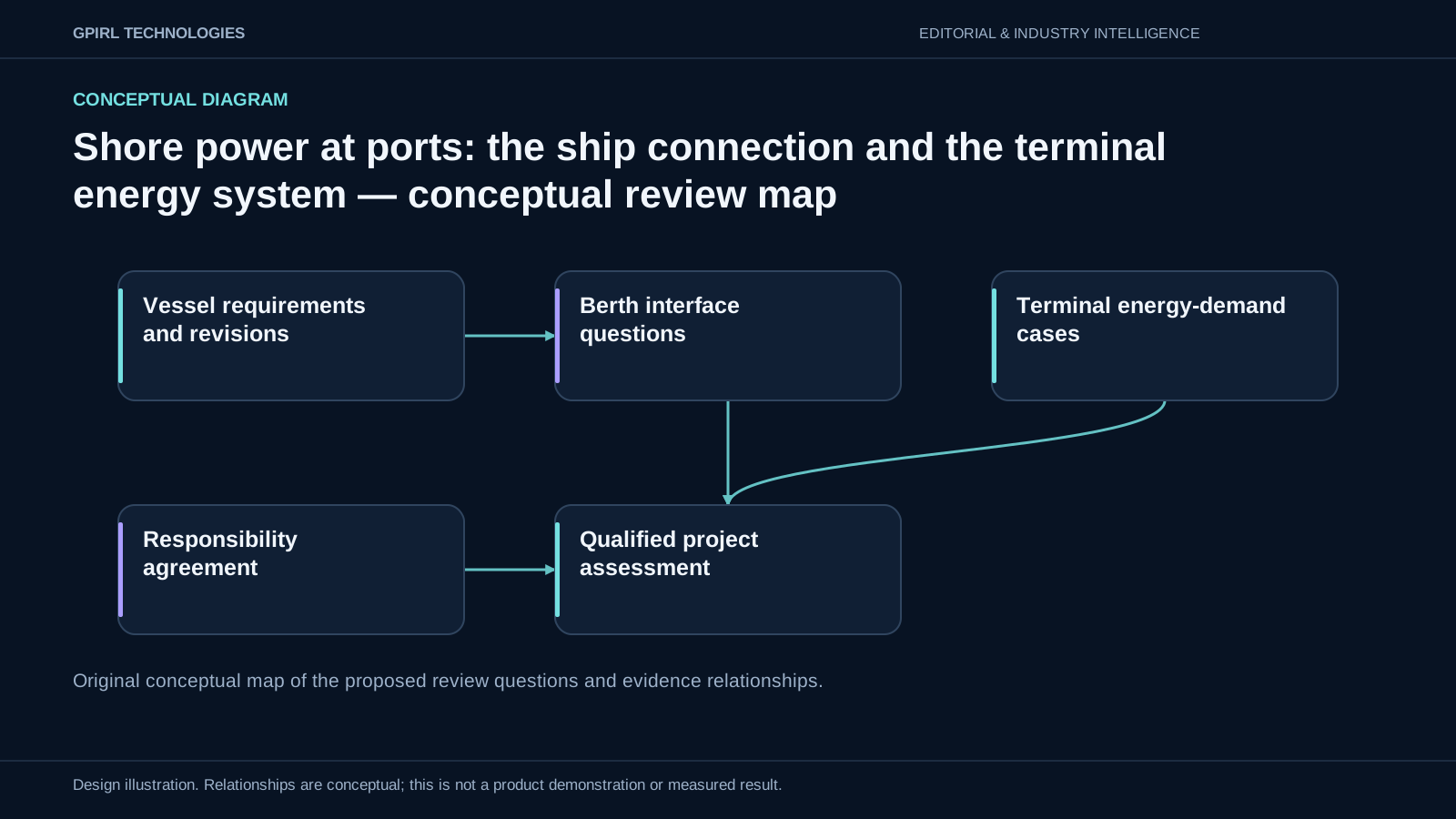
Consider an unnamed terminal evaluating shore-side electricity for an expected mix of visiting vessels. No equipment is selected and no measured benefit is assumed. The proposed review begins with three separate records: the fleet information provided by operators, the berth-side installation concept and the energy-supply options under discussion. Each has a named owner and a revision date. The purpose is to expose differences in assumptions before the records are combined into a project decision.
Suppose one vessel's information is incomplete while another operator proposes a different visiting pattern. The review should record both uncertainties and ask how they affect the design basis. It should not conclude that a battery, converter or new substation necessarily solves the issue. The example produces a list of questions and dependencies, not a validated electrical design, a completed safety assessment or a calculated return on investment. Any later comparison would need actual input data and a defined evaluation method.
Keep environmental and operational claims within their evidence
A project proposal should state what environmental outcome it intends to assess, which activities lie inside the boundary and what energy-supply assumptions are used. The label shore power alone does not quantify total emissions, cost or the share of a vessel's demand supplied from land. A statement about an intended local operating change should not be expanded into a claim of zero lifecycle emissions. This article provides no numerical emissions estimate or universal regulatory deadline.
EMSA describes shore-side electrification as a planning and safety topic with several options [S1]. That supports evaluating the whole service rather than treating a connection label as proof of readiness. Operational availability, compatibility, maintenance and responsibility arrangements still need their own evidence. A document can identify these questions without promising that a chosen arrangement eliminates delays, prevents every electrical fault or guarantees safe operation. Such assurances would require a different level of assessment than this editorial review.
Plan how a change will be accepted
A useful interface record also needs a change process. A revised vessel document, a different berth allocation or an altered demand case can invalidate an earlier comparison. The proposed practice is to name the affected assumptions, retain the previous revision and identify who must review the change. An updated file should not automatically inherit the acceptance of the file it replaced. That is particularly relevant when engineering, procurement and operational teams receive information through different channels and at different stages of the project.
Commercial comparisons should preserve the same discipline. Record the service boundary, utilisation assumptions, exclusions and responsibilities behind each option before comparing a headline price. An apparently similar offer may cover a different part of the interface or rely on an unconfirmed supply arrangement. This article supplies no cost model and no preferred equipment package. It recommends making the basis of a comparison explicit so a qualified project team can assess what additional evidence would change its recommendation.
The record should also distinguish planned review from completed acceptance. A named test, inspection or contractual approval is a future requirement until its responsible party has supplied the relevant evidence. A status field should link to that evidence and state its scope. Such a record can support coordination, but it cannot replace engineering judgement, establish competence or authorize an operational electrical action.
The decision record should preserve its limits
Before a planning recommendation is accepted, its reader should be able to distinguish the reference material consulted, the installation assumptions, the options compared and the decisions still reserved for qualified assessment. References need the relevant edition and application context. Supplier information needs attribution. A conceptual illustration needs a label showing that it is not an approved electrical schematic. These simple distinctions reduce the chance that an early study becomes an operational instruction through repeated reuse.
The practical takeaway is to make the ship connection and terminal energy system meet through an explicit, reviewable planning boundary. Information ownership and engineering responsibility belong in that boundary alongside equipment requirements. EMSA provides broad planning context, while specialist references such as OCIMF need to be applied within their actual scope [S1, S2]. No GPIRL deployment, port client, certified design, equipment capability or project performance is claimed here. The proposed record is a way to organise the questions that a real project must answer.
Official background videos
External publisher context. These recordings do not demonstrate GPIRL products or validate the proposed designs.
- Port of Seattle — Shore Power on the Seattle Waterfront
Port-authority illustration of ship-to-shore electrical connection context, complementing the article's conceptual physical/information boundaries.
Sources and further reading
- [S1] Shore-Side Electricity guidance
- [S2] Onshore Power Supply Systems: Recommendations for Tankers and Terminals
References do not imply product certification or endorsement.
Have a related operational question? Discuss the information, review and governance questions in your operating context with GPIRL Technologies.