The examples below illustrate workflow design questions. Product scope and integrations are assessed for each use case.
Translate the process as well as the interface
An international rollout involves more than translating buttons. The same business label may refer to different responsibilities, documents or decisions in different markets. Begin by asking local teams to describe the process in their own terms and compare it with the proposed global workflow.
For teams operating across Italy, the US, Canada, China, India and emerging markets, choose named countries and entities for the initial assessment. Treating emerging markets as a single operating environment hides differences that the implementation needs to resolve.
Keep a shared control foundation
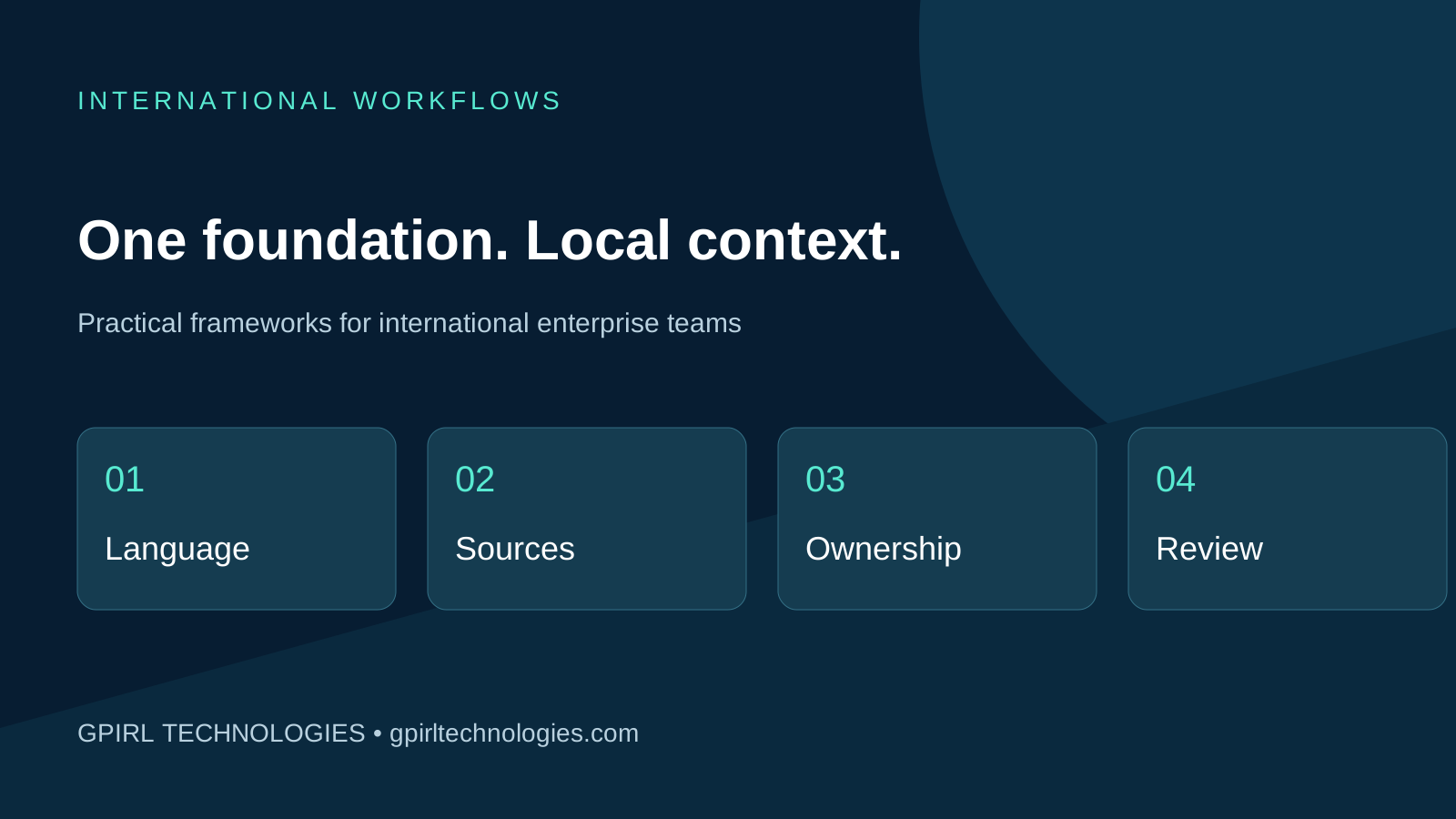
Define the controls that should remain consistent: source traceability, explicit permissions, change records and an escalation route. Then identify the elements that require local configuration, such as language, authoritative sources, operating calendars and reviewer ownership.
Maintain an assumption register. For each assumption, record the affected market, the evidence supporting it and the person responsible for validation. An unresolved assumption should remain visible when leadership considers expanding the rollout.
Evaluate language with real decision examples
Use synthetic scenarios that include local terminology, ambiguous dates and a correction issued after the original instruction. Ask a qualified reviewer whether the proposed output preserves the meaning and qualifications needed for the decision.
Do not rely only on a fluent translation. Test whether the system identifies a source's market, keeps an exception visible and routes questions to someone with the appropriate authority. Record errors by cause so that a language issue is not confused with missing source evidence.
Choose a staged expansion decision
Agree what evidence would justify moving from one market to the next. Include failed cases, local feedback, operational support and unresolved requirements. A useful rollout gate should make the remaining uncertainty explicit rather than use a generic readiness label.
GPIRL Technologies is developing a shared platform approach for industry workflows. International scope and integrations need to be assessed for each use case. Bring one process, the target markets and the current review path to a discovery conversation so that the discussion starts with operational needs.
Sources and further reading
The workflow examples are practical design proposals by GPIRL Technologies. References do not imply product certification or endorsement.
FROM INSIGHT TO YOUR USE CASE
Explore this with Platform.
Bring a representative workflow, the available evidence and the decisions your team needs to support.