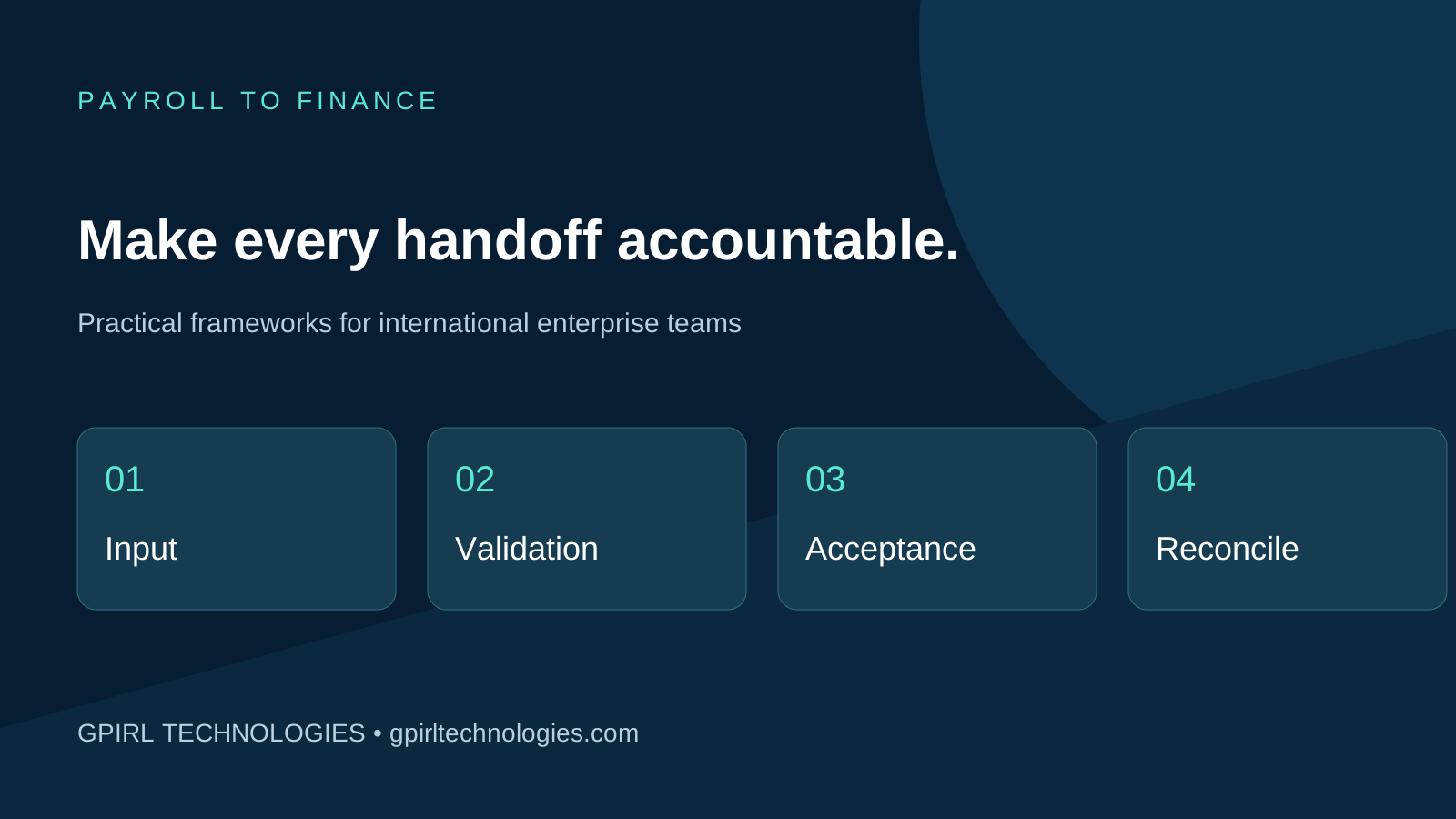
The examples below illustrate workflow design questions. Product scope and integrations are assessed for each use case.
Map the acknowledgement, not only the export
A payroll export is not proof that Finance received usable information. Start a handoff review by identifying the sender, recipient, agreed format and evidence of acceptance. Define what happens when the file arrives but a record is rejected.
Follow one synthetic payroll cycle from approved input through the finance interface and reconciliation. Record the decisions made at each stage. This creates a concrete basis for discussing integration or AI support without exposing employee information during discovery.
Make identifiers and totals explicit
Agree how the systems identify an entity, period, cost centre and transaction. Similar field labels can carry different meanings. Write those meanings down and assign an owner to the mapping rather than relying on informal knowledge held by one person.
Define the totals and record counts that the receiving team expects to reconcile. Specify how reversals, late adjustments and rejected records appear. A passed format check does not prove that the economic meaning of the data is correct.
Design the exception route
For each failed check, define who investigates, which evidence is retained and who can authorise a correction. Keep the original file reference and the corrected version connected. A clear history allows a reviewer to understand what changed and why.
Test the absence of an acknowledgement, a duplicate transfer and an unexpected reporting period. Decide whether the workflow should pause, retry or escalate. Automatic retries should not create duplicate downstream actions.
Separate global control from local requirements
An international operating model can share a common handoff template while retaining entity-specific accounting and payroll requirements. Teams coordinating Italy, the United States, Canada, India, China or other countries should validate those requirements with their relevant specialists.
The practical output is a source-to-target map, an acceptance checklist and an exception ownership table. These documents help a GPIRL AI discovery discussion focus on evidence gathering and review support. They do not imply a ready-made integration with a particular payroll or finance system.
FROM INSIGHT TO YOUR USE CASE
Explore this with GPIRL AI.
Bring a representative workflow, the available evidence and the decisions your team needs to support.